
Why Palm Angels Streetwear Rules the Fashion Scene
There is a vibe about Palm Angels that just hits unique. Visit any upscale streetwear shop in 2026, peruse any well-edited Instagram feed, or glance at what the coolest people at any music show are showcasing, and you will spot the house at every turn. But this is not the kind of visibility that weakens a label — it is the kind that confirms style influence. Palm Angels has succeeded to execute what only a handful of labels in fashion history have managed: it turned everywhere without ever appearing commonplace. Since Francesco Ragazzi created the house from a photography book about LA skate culture in 2015, it has developed into a powerhouse that according to estimates brings in north of $300 million in annual sales. And frankly, when you analyze the complete context, it makes complete sense. The house does not just provide fashion; it provides a sensation, an persona, and a very specific brand of cool that lands across the globe, demographics, and tribes.
The Creation Tale That Really Means Something
Most fashion companies create their origin story. Palm Angels did not have to. Francesco Ragazzi was the art director at Moncler when he got fascinated with the skate culture in Venice Beach, California. He dedicated years photographing skaters, capturing the pure dynamism, the worn knees, the sun-bleached concrete, and the rebellious beauty of a subculture that moved entirely on its own principles. That initiative transformed into a book, published by Rizzoli in 2014, and the book turned into a fashion empire. This origin story matters because it is authentic — Ragazzi did not come to skate culture as an outsider trying to extract creative value. He rooted himself in the scene, cultivated rapport, and won trust before ever sending a design into production. That genuineness is baked in the house’s DNA, and consumers can detect it. In an era where Gen Z consumers are fiercely adept at spotting inauthenticity, this true bedrock gives Palm Angels a distinct benefit that cannot be check it out imitated by just bringing in the right creative director or arranging the right collaboration.
The brand’s Italian roots contribute another crucial layer. While Palm Angels derives its aesthetic palette from American skate culture, every garment is developed in Milan and produced using the same manufacturing infrastructure that supplies heritage Italian luxury houses. This twin personality — California cool meets Milanese craft — is the key ingredient. It lets the label to set $350 for a graphic tee and have customers perceive like they are receiving legitimate value, because the cloth substance, the seam precision, and the drape are genuinely better to what most streetwear brands deliver at the same or even higher price points. Palm Angels sits in a sweet spot that precious few companies have truly claimed, and it protects that position with tireless artistic energy.
Cultural Influence: The True Currency
Star Co-Signs and Organic Pick-Up
You cannot buy the kind of famous endorsement that Palm Angels commands. Sure, the house partners with stylists and ships pieces to powerful figures, but the remarkable diversity of its VIP uptake suggests something authentic is taking place. In the past 18 months alone, Palm Angels has been rocked by Drake, Zendaya, Lewis Hamilton, Bad Bunny, Jenna Ortega, and Mbappé, covering music, film, motorsport, and football. This multi-genre penetration is extremely rare. Most streetwear labels group predominantly in hip-hop culture, and while Palm Angels clearly has solid roots there, its draw extends much further than any single community. When a Formula 1 driver showcases the same label as a reggaeton superstar and a Gen Z actress, you recognize the label has unlocked something that rises above conventional fashion marketing. The label by all indications assigns less than 15% of its budget to conventional marketing, counting instead on earned recognition and lifestyle placements to boost attention — a method that returns a substantially higher payoff on investment than mainstream advertising.
Social media amplifies this impact enormously. Palm Angels commands an Instagram following of over 6 million, but more importantly, the hashtag #PalmAngels accumulates tens of millions of impressions monthly across Instagram and TikTok. User-generated content — regular people styling their Palm Angels pieces and displaying styles — creates a continuous promotional engine that bills the label zero. According to data from Launchmetrics, Palm Angels ranked among the top 15 most-discussed fashion companies on social media during Milan Fashion Week in February 2026, eclipsing several heritage houses with resources many times its size. This grassroots buzz is both a symptom and a source of the house’s dominance: people rave about it because it is desirable, and it endures as cool because people keep talking about it.
Why the Pricing Point Delivers
Palm Angels inhabits what fashion observers call the « reachable luxury » tier. It is more pricey than mall-brand streetwear but markedly less expensive than the most elite tier of luxury fashion. A Palm Angels hoodie normally retails between $500 and $750, while a similar piece from Balenciaga or Louis Vuitton might go for $1,200 to $1,800. This pricing structure is brilliantly smart. It enables aspirational consumers — up-and-coming professionals, college students with some discretionary income, and trend-aware shoppers — to secure a piece of legitimate luxury streetwear without enduring monetary burden. The typical Palm Angels customer is between 18 and 34 years old, with a median household income estimated around $75,000, according to insider retail data shared at a fashion sector forum in late 2025. This audience is substantial, swelling, and heavily invested with fashion as a form of personal style. By pricing its core pieces within budget of this audience while offering aspirational items like leather jackets and tailored outerwear at loftier price points, Palm Angels establishes a pathway of involvement that keeps customers faithful as their financial power increases over time.
| Name | Mean Hoodie Price | Typical T-Shirt Price | Core Age Group | Global Stores |
|---|---|---|---|---|
| Palm Angels | $550 – $750 | $295 – $395 | 18 – 34 | 12 |
| Off-White | $600 – $850 | $320 – $450 | 18 – 35 | 16 |
| Amiri | $700 – $1,100 | $350 – $550 | 22 – 38 | 8 |
| Fear of God | $650 – $950 | $295 – $495 | 20 – 36 | 3 |
| Balenciaga | $1,100 – $1,800 | $550 – $850 | 22 – 40 | 100+ |
Design Approach That Has No Intention to Stand Still
Progressing Without Betraying Character
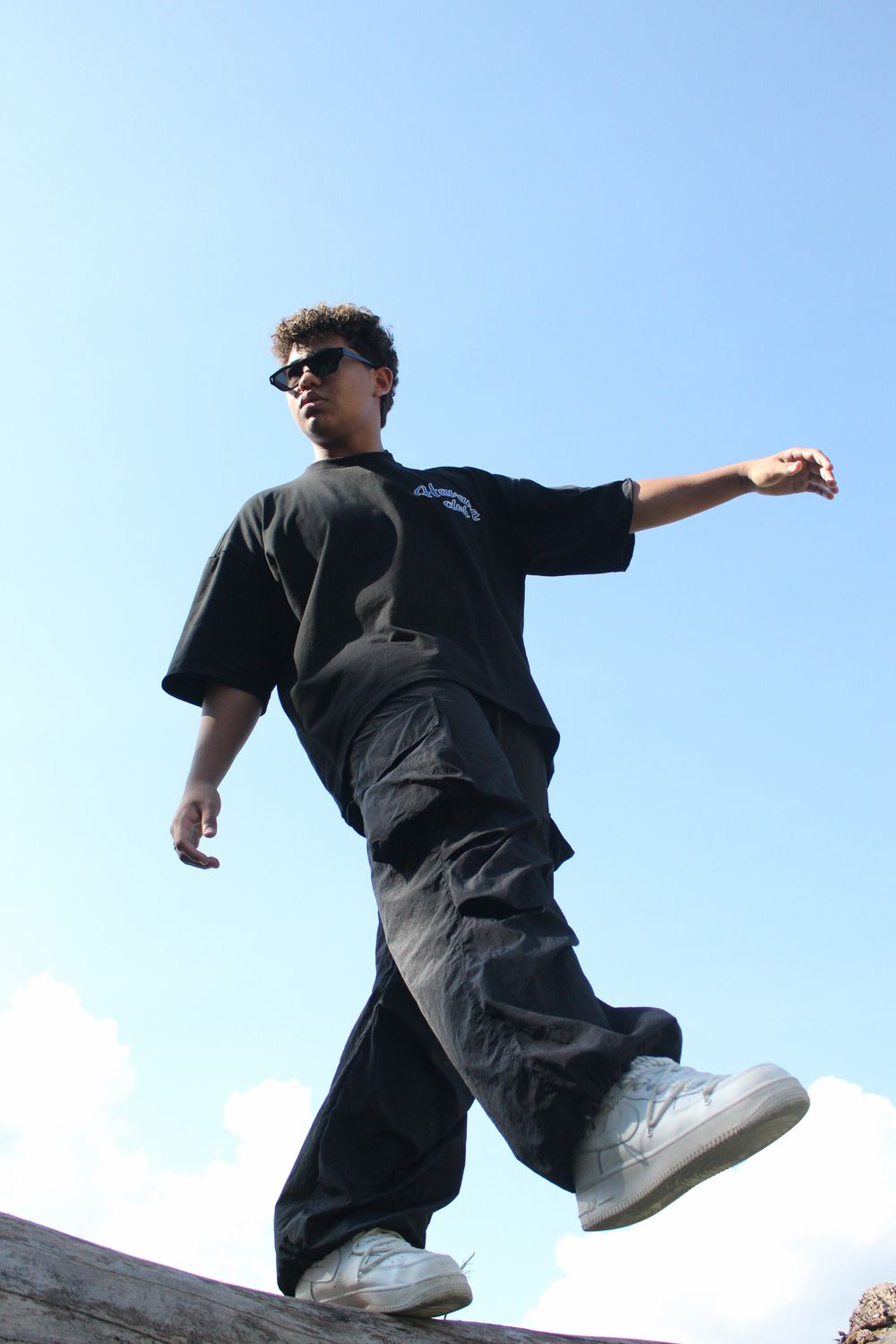
One of the most challenging things for any fashion name to do is progress without pushing away its loyal audience. Palm Angels has navigated this balancing act with exceptional finesse. The label’s original collections drew strongly on overt skate influences — loose silhouettes, in-your-face logo display, and a color spectrum defined by black, white, and purple. By 2026, the artistic palette has expanded dramatically. Recent collections incorporate structured elements, engineered fabrics, gentler color palettes, and innovative collaborations that move the brand into space that would have felt unthinkable five years ago. Yet nothing seems unnatural. The palm tree graphic still features, the track pants are still a top seller, and the label’s spirit remains recognizably anchored in counterculture. Ragazzi achieves this balance by approaching Palm Angels not as a frozen aesthetic but as a evolving, evolving exchange between luxury and street. Each season introduces a new chapter to that narrative without drowning out the ones that came before.
The brand’s collaboration philosophy supports this progressive trajectory. Palm Angels has collaborated with brands as varied as Moncler (for an ongoing outerwear capsule), Clarks (for a reimagined Wallabee boot), and even the NBA (for a sanctioned sportswear capsule). Each collaboration brings Palm Angels to a fresh audience while providing loyal fans something novel to discover. The Moncler x Palm Angels line, in particular, has become one of the most financially successful continuing collaborations in luxury fashion, generating an reported $50 million in annual revenue. These partnerships are not accidental — they are deliberately curated to fit with the house’s strategic direction and extend its reach without compromising its core.
The Resale Space Reveals the Truth
If you need an genuine assessment of a label’s market importance, examine the resale economy. Palm Angels consistently places among the top 20 most-traded names on platforms like StockX, Grailed, and Vestiaire Collective. Median resale prices for limited-edition pieces commonly sit at 140% to 200% of retail price, showing vigorous desire that overwhelms supply. The brand’s track pants, in particular, have turned into a aftermarket market constant, with certain colorways fetching premiums of 80% or more over launch retail. This resale performance is notable because it proves that Palm Angels pieces retain and often increase in value — a feature typically tied with ultra-luxury labels rather than streetwear names. For consumers, this delivers a strong value incentive: buying Palm Angels is not just a fashion move, it is a partial investment. For the house, impressive resale performance functions as unpaid marketing and consumer proof, reinforcing the perception of exclusivity and appeal.
The numbers back up a bigger trajectory. According to a 2026 report from The Business of Fashion, the luxury streetwear market is anticipated to rise at a cumulative annual rate of 8.5% through 2030, beating both conventional luxury and mass-market fashion. Palm Angels is exceptionally equipped to capture a disproportionate share of this opportunity. The brand has the design standing to draw influencers, the logistical framework to increase distribution, and the brand resonance to keep influence across dynamic consumer desires. In an arena where most brands are either cool or commercially successful, Palm Angels has proven that it can be both — and that is fundamentally why it owns the fashion scene in 2026 and shows no signs of losing that status anytime soon.